Forget everything you think you know about Kenya. Forget the TikTok videos where everything is paradise and the old blog posts where everything is danger. Both are fairy tales.
I didn’t move to Kenya looking for adventure. I grew up there, in Kabati, a small village in Kitui County, without electricity and without running water. Every day we walked barefoot to fetch water. In a place like that you learn the most important thing for Kenya: pay attention, read people and don’t stand out unnecessarily, even if you’re white.
Today I live in Switzerland and travel to Kenya regularly. When I was sitting in a café in Nairobi with an old friend, he grinned at me: “Brother, you’ve really become a proper Mzungu.” In Kenya, Mzungu is what people call white people and foreigners. He was right. And that’s exactly why I can translate both sides for you.
The short answer: is Kenya safe?
Kenya is not a dangerous country, but it isn’t a country where you can simply switch off either. Most trips go without problems. What’s dangerous are certain moments: alone on the street at night, your phone at an open car window, a taxi with an unchecked number plate, a stranger who suddenly puts pressure on you. If you know these moments and behave like the people who live there, you can travel calmly and safely in Nairobi, on safari and on the coast.
As of 22 October 2026. Before you travel, check the current travel advice from the FDFA, the German Federal Foreign Office or the Austrian BMEIA.
This guide doesn’t give you hotel lists. It gives you what matters:
- The Mzungu matrix: why you often get different prices as a foreigner, why that isn’t racism and how you can still pay fairly.
- The code of the street: why people in Nairobi wait indoors at night and close the window in traffic jams, and why exactly that protects you.
- The police game: what really happens at a checkpoint, and the one sentence that spares you almost any argument.
- “Tutaona” and “pole pole”: why a Kenyan “yes” doesn’t always mean yes and why hurrying costs you money in Kenya.
New since 5 October 2026: without this insurance you won’t fly
Kenya now requires almost all visitors to have its own Kenyan health insurance, the “Inbound Travel Health Insurance”. It costs up to USD 44 per person and comes on top of the eTA (the electronic travel authorisation, USD 30). Your insurance from Switzerland, Germany or Austria does not replace it. And conversely, it doesn’t replace your own insurance either.
Many older blogs don’t mention this rule yet. If you miss it, you’ll have a problem shortly before departure.
My free Kenia-Check explains in five minutes what you need for the eTA and insurance, what it costs and which five shortcuts make your first day in Kenya easier.
Read for 5 minutes, save hours of learning the hard way.
Arriving at Nairobi airport (JKIA): the first test
Jomo Kenyatta airport, JKIA for short, is your first level. This is where it’s decided whether your trip becomes a stress marathon or starts relaxed.
Apply for your eTA only on the official site etakenya.go.ke, at least two weeks before departure. It usually arrives within three working days, but not always. Have the address of your first accommodation not only on your phone but also on a piece of paper. A piece of paper has never had a flat battery.
Many drivers wait outside the arrivals hall. Not all of them are dishonest, but you’re negotiating while tired, with nothing to compare, and you often pay considerably more. With Uber, Bolt or Little Cab you see the price before you get in, and the ride is recorded.
Shortly after you book, your phone rings. “Uko wapi?” asks the driver, meaning “Where are you?”. Nairobi has hardly any house numbers; people navigate by what they can see: “Arrivals, next to the coffee shop.”
(That’s the first of many small shortcuts. The Kenia-Kompass contains the one sentence that lets you spot a fake driver immediately, even if he’s holding up a sign with your name on it.)
Save the emergency numbers before you get off the plane: 999 or 112 for the police, 922 for an ambulance.

Is Nairobi safe? Day and night are two different cities
For most travellers, Nairobi is just a stopover. For me it was always the gateway to the world. The city has two heartbeats: by day the loud, laughing chaos of the markets, by night a deep, bass-heavy pulse. If you can read both, you’ll experience one of the most exciting cities in Africa.
Nairobi by day
By day, Nairobi is yours if you keep a few rules in mind. Walk through the green streets of Karen, stroll through Karura Forest or drink a really good coffee in Westlands. The centre, the CBD, isn’t a no-go zone but a zone for people with a plan. I only go there with a clear destination and leave anything shiny in my room.
The most important thing is your phone. In Nairobi it changes hands faster than anything else. In a traffic jam, someone reaches through the open car window. On the pavement, a motorbike rides past and the man on the back grabs it. Many people in Nairobi close the window in traffic and don’t make calls in the middle of the pavement. That isn’t fear, it’s respect for reality.
(In the Kenia-Kompass you’ll find the tricks used to steal phones in Nairobi, including the nice woman who “just wants to make a quick call”, and what to do about them.)
Nairobi at night
At night the rules change completely. This is no time for spontaneous walks.
I do what many people who live in Nairobi do: order a ride by app and wait inside, in the restaurant or the lobby. Only when the driver calls to say he’s arrived do I go out and check the number plate. If it doesn’t match, I don’t get in – not even if he explains that his car is being repaired and this one belongs to his friend.
And when we go out to party, one person stays sober. When everyone is drunk, nobody is paying attention any more.
Why I don’t give you drivers’ numbers
Many guides promise “my personal driver’s number”. I don’t, and that’s deliberate. As soon as a private number appears in a book, it gets overwhelmed, and tomorrow someone else may already be driving the car.
Instead you get a filter: a simple process for checking any driver and any operator yourself in three minutes. It will get you further than any phone book.
Police checks in Kenya: the unwritten rules
A dusty country road between Nairobi and Naivasha, and suddenly a police checkpoint. For many travellers a moment of panic. For you a short game, if you know the rules.
Most of the time it’s routine. Whether it takes two minutes or an hour depends less on your paperwork than on your behaviour.
Act 1: calm, not submission. Pull over, engine off, hands on the wheel. No frantic rummaging. Then greet them politely: “Habari, Afande.” Afande is the respectful way to address police officers. I make a bit of small talk, stay patient and let the officer talk. Whoever shows haste loses.
Act 2: when it’s about money. If you really did make a mistake, for example turning at a prohibited spot, a check can quickly become serious and loud. And sometimes someone hints that this could be “sorted out right here”, perhaps even using the word “chai” (tea). Don’t go along with it. Bribery is illegal in Kenya, for the person who takes as well as for the person who pays. People who live there stay calm in moments like these. You don’t laugh, you don’t argue and you don’t offer money. You say calmly:
“Officer, if there is an official fine, please write me a receipt and I will pay it the official way.”
Often that settles the matter.
(This sentence helps you in most cases. For the rest, the Kenia-Kompass has a clear procedure: what to do if you don’t know whether the uniform is genuine, when to keep your phone away and when you may make a call, and the Swahili phrases that show respect without you giving in.)
The “fake” M-Pesa money scam
M-Pesa is money on your phone; in Kenya people pay for almost everything with it. And that’s exactly where the country’s most common scam lurks.
Your phone vibrates: a text message says you’ve received money. Shortly afterwards someone calls, apologises very politely and asks you to “quickly send the money back”. The text is fake. Anyone who sends it back is sending their own money to a fraudster.
The rule: never send money back yourself. Check directly in M-Pesa whether any money has arrived at all. If someone really did send something by mistake, the refund goes through Safaricom’s official channel: forward the genuine M-PESA message to 456 or select “Reverse Transaction” in the app.

Is Diani safe? The coast and the beach boys
Diani Beach is a paradise. But here too, your behaviour decides how you are perceived. After just ten minutes the first one comes along: “Hello my friend, where are you from?”
Understand rather than judge. These are the “beach boys”, young men offering trips, souvenirs or company. That isn’t a crime but a business in an area with little work. Some of them know the reef better than any hotel.
Clear but friendly. If you don’t want anything, a smile and an “Asante, hapana” (thank you, no) is enough. Then keep walking. If you stop, you’re already in a sales pitch. If you’re rude, you lose the respect of the people around you.
The “gift”. Someone presses a small wooden figure into your hand and carves your name into it in a flash. Then he wants money for his artwork. Calmly put the figure down and walk on.
Only take to the beach what you can afford to lose. Never leave your phone alone on your towel.
(The really expensive scams don’t happen on the beach but when booking safaris and accommodation, long before you land. How to check an operator in three minutes and how to tell that the money ends up with a “cousin” instead of the company is explained in “Kenia wie ein Local”.)
Is Kenya safe for women travelling alone?
Many women travel alone through Kenya and have a great time. But a few situations affect women travelling alone more often: someone who keeps turning up “by chance”, asks for your room number or ignores a clear no.
You don’t have to be polite to anyone who crosses your boundary. “Stop. Do not follow me.” is enough. Then go where other people are: to reception, into a shop, to security. Keep your room number to yourself, and have the first date in a public place, getting there and home under your own steam.
Health in Kenya: I’m not a doctor, but you need to know this
I grew up in an area where there was no doctor round the corner. You learn quickly there that prevention isn’t optional, it’s a must.
Malaria occurs in large parts of Kenya below 2,500 metres, including the safari parks and the coast. It is rare in central Nairobi. Whether you need tablets is decided by a travel medicine specialist based on your route, not by an article on the internet. Insect repellent, long clothing from dusk and a mosquito net always help. If you get a fever during your trip or up to a year afterwards, see a doctor immediately and say that you were in Kenya.
When it gets serious: Nairobi has good private hospitals. Whether one will treat you without an advance payment depends on your insurance. That’s why you save the hotline of the Kenyan mandatory insurance, +254 719 044 777, and the emergency number of your own insurance before you fly.
Ebola: According to the CDC, there had been nine confirmed cases in Nairobi as of 20 October 2026, all among close contacts and with no reported transmission in the general population. The CDC rates the risk for travellers as low. Check the current overview before you leave.
(What to do if the hospital demands a large advance payment, and the ready-made English message that gets your insurance to approve the costs, can be found in the Kenia-Kompass and on the Notfall-Karte.)
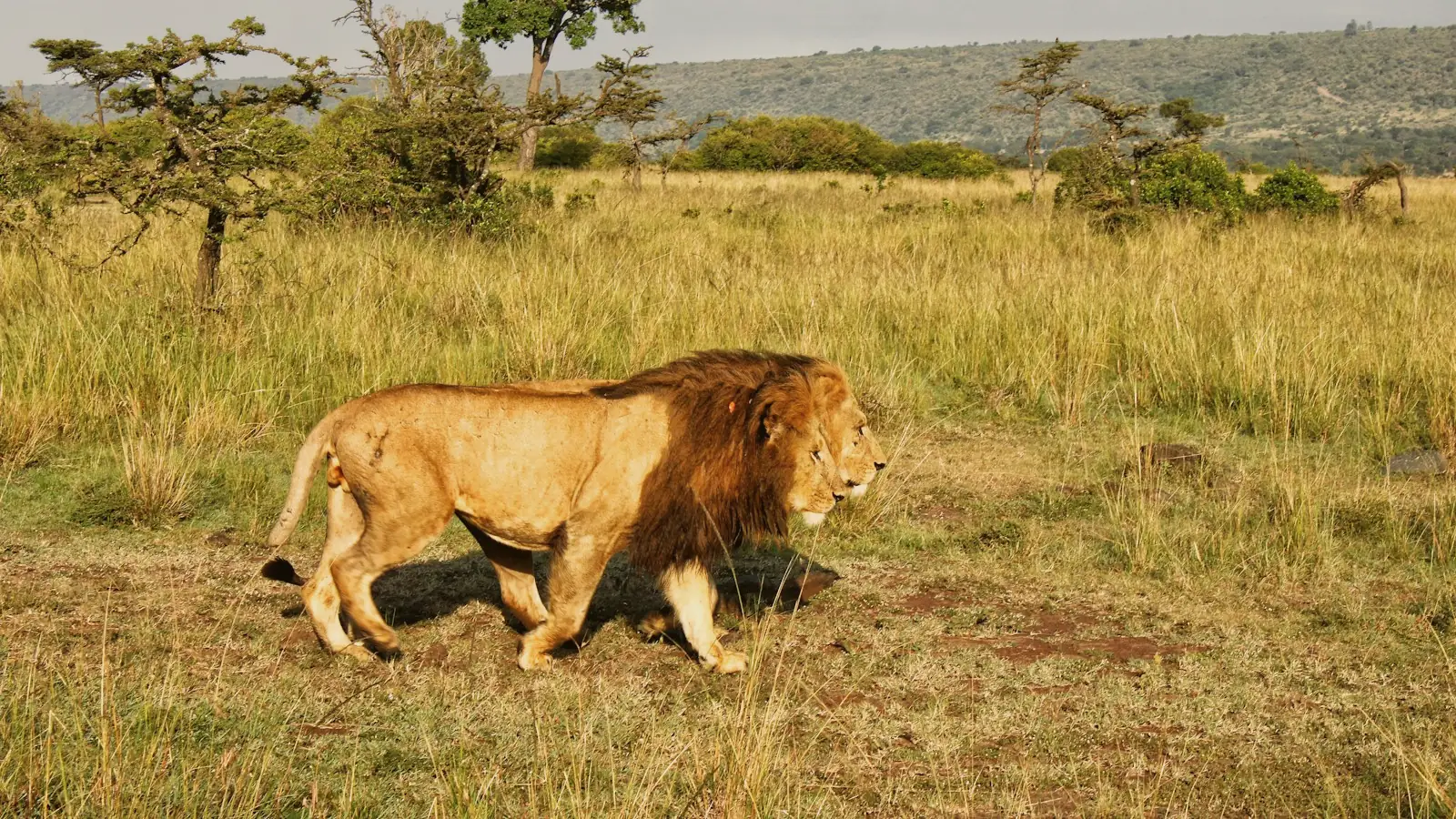
The road: who has right of way in Kenya
Forget the glossy pictures. The real Kenya begins where the tarmac ends. On the road, the official rules are more of a suggestion. The real laws are set by the hierarchy.
Honking means “I’m here”. Flashing headlights means “I’m going now”. At the very top are the matatus, the colourful minibuses. You always make way for them. Below them come the lorries. At the very bottom is you. And below you are the goats and cows, which paradoxically still always have right of way.
On foot it’s different from home too. There are zebra crossings, but many drivers treat them as decoration. And because Kenya drives on the left, you look right first. My trick: I cross the road together with locals. They know when the gap is big enough.
I would only drive yourself if you’re used to driving on the left and never drive cross-country at night. For a safari, a local driver is usually the better choice. If the car breaks down in the bush, there’s immediately someone next to you who knows whom to call.
The difference between knowledge and instinct
With this you’re already well prepared. But the real challenge isn’t knowing the rules. It’s staying calm at the right moment and knowing what comes next. That’s the difference between insecurity and confidence.
Most travel guides show you where to look. My books show you how to look. They are an attempt to lend you my instinct for the duration of your trip – a way of seeing that didn’t come from travelling but from growing up.
- Saimens Kenia-Kompass is for the moments when things go wrong: how to get through everyday life in Kenya safely, and what to do in case of police, pressure, theft, illness or a lost passport, with ready-made messages in English.
- Kenia wie ein Local is for planning: entry, money, M-Pesa, cultural codes, Nairobi, safari, coast, routes and how to check operators.
- The Notfall-Karte Kenia has all the numbers and the most important phrases on one page, for your phone and for printing.
The Komplett-Set: all three together for EUR 89 / CHF 89
Individually they cost EUR 97 / CHF 97. No subscription, no countdown, no safety guarantee that nobody can honestly give. Just what I would have liked to have myself when I came back as a “Mzungu” for the first time.
Not sure yet? Start with the free Kenia-Check.
FAQ: the most common questions about safety in Kenya
Is Kenya safe for tourists in 2026?
For most travellers yes, if you know the typical risky moments: on the street at night, your phone in traffic, unchecked taxis and strangers who put pressure on you. Check your country’s current travel advice before you travel.
Is Nairobi dangerous?
Nairobi as a whole is not dangerous. It depends on the time, the place and your behaviour. By day with a plan, at night only by app taxi from door to door.
Do I really need insurance in addition to the eTA?
Yes. Since 5 October 2026, visitors generally need the Kenyan mandatory health insurance, up to USD 44 per person. You keep your own travel insurance as well.
When is the best time to travel to Kenya?
For the great migration in the Maasai Mara, usually July to October. For dry safaris and beach weather, often December to March. In the rainy season there are fewer people and lower prices, but also flooded roads.
Do I have to take malaria tablets?
A travel medicine specialist decides that based on your route. For central Nairobi usually not, for safari parks and the coast often yes.
How much cash do I need?
Not much. You pay for a lot with M-Pesa or card. I carry money for the day and keep a reserve somewhere else.
Which accommodation on the coast is good?
Instead of hotel names that may be different tomorrow, I give you the method: read the reviews from the last three months and look for comments on safety, cleanliness and the way home at night, not just the pool.
The most important tip against scams in one sentence?
If a stranger is very friendly and immediately wants something from you, calmly say “Asante, hapana” before the deal begins.
What must I pack for a safari?
A light neckerchief or buff. Not against the cold, but against the fine red dust that creeps into every crevice on game drives.
Sources
- eCitizen – Inbound Travel Health Insurance
- Kenya eTA – official site
- Safaricom – M-PESA Reversal
- CDC – Ebola, current situation
- TravelHealthPro – Kenya
- FDFA – travel advice for Kenya
- German Federal Foreign Office – Kenya

About the author
Saimen Bearth, born in 1989, grew up in Kabati in Kitui County (Kenya) and now lives in Basel. He didn’t learn Swahili and Sheng, Nairobi’s street language, at school but on the street and in the matatu. He travels to Kenya regularly. He doesn’t write hotel lists; he translates how everyday life in Kenya works for travellers from Switzerland, Germany and Austria.
This article is current as of 22 October 2026.